 Assisted Language Learning
A product note — the reading product within AXL
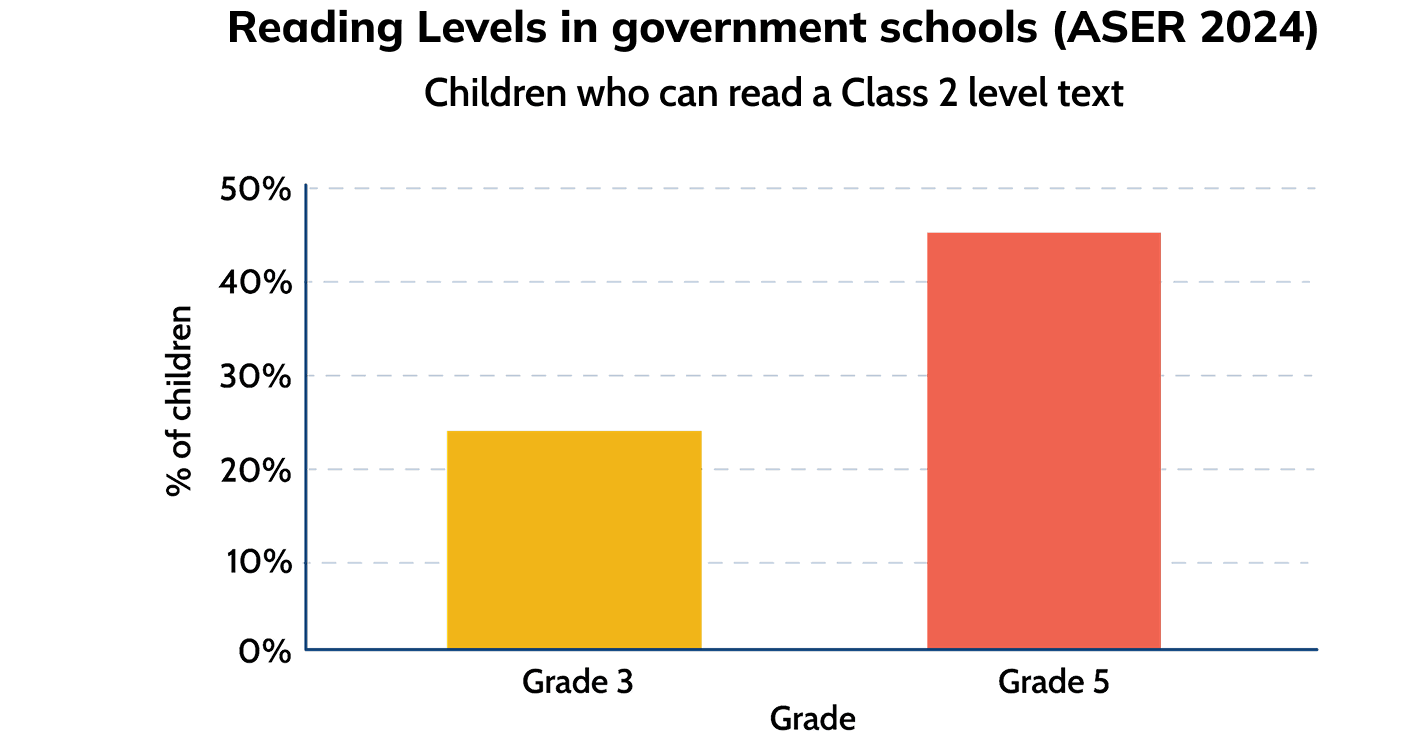
ASER 2024 found that 23.4% of Grade 3 children in government schools could read a Class 2 level text. This improves by Grade 5 to 44.8%. While there is real progress as children move up through school, it still means many children cannot read textbooks written for children three grades below.
A child who does not learn to read by Grade 3 cannot catch up on their own. Further, other subjects that follow require reading - word problems in math, science or social science textbooks. Therefore an inability to read can quickly translate to an inability to progress through school and lead to eventually dropping out from the education system.
Why do so many children struggle to read?
Why are so many children struggling to read? Reading is not a natural attribute every human is born with, unlike hearing or speech. Learning to read needs long, deliberate practice, usually with a caring adult supervising the process. For many children in our schools, teachers aren’t able to play this role since they are catering to large mixed classrooms and simply cannot give each child individual attention. In addition, children aren’t getting the help they need at home. Our children are deprived of the abundant, personalized practice they need.

What is ALL? What is its goal?
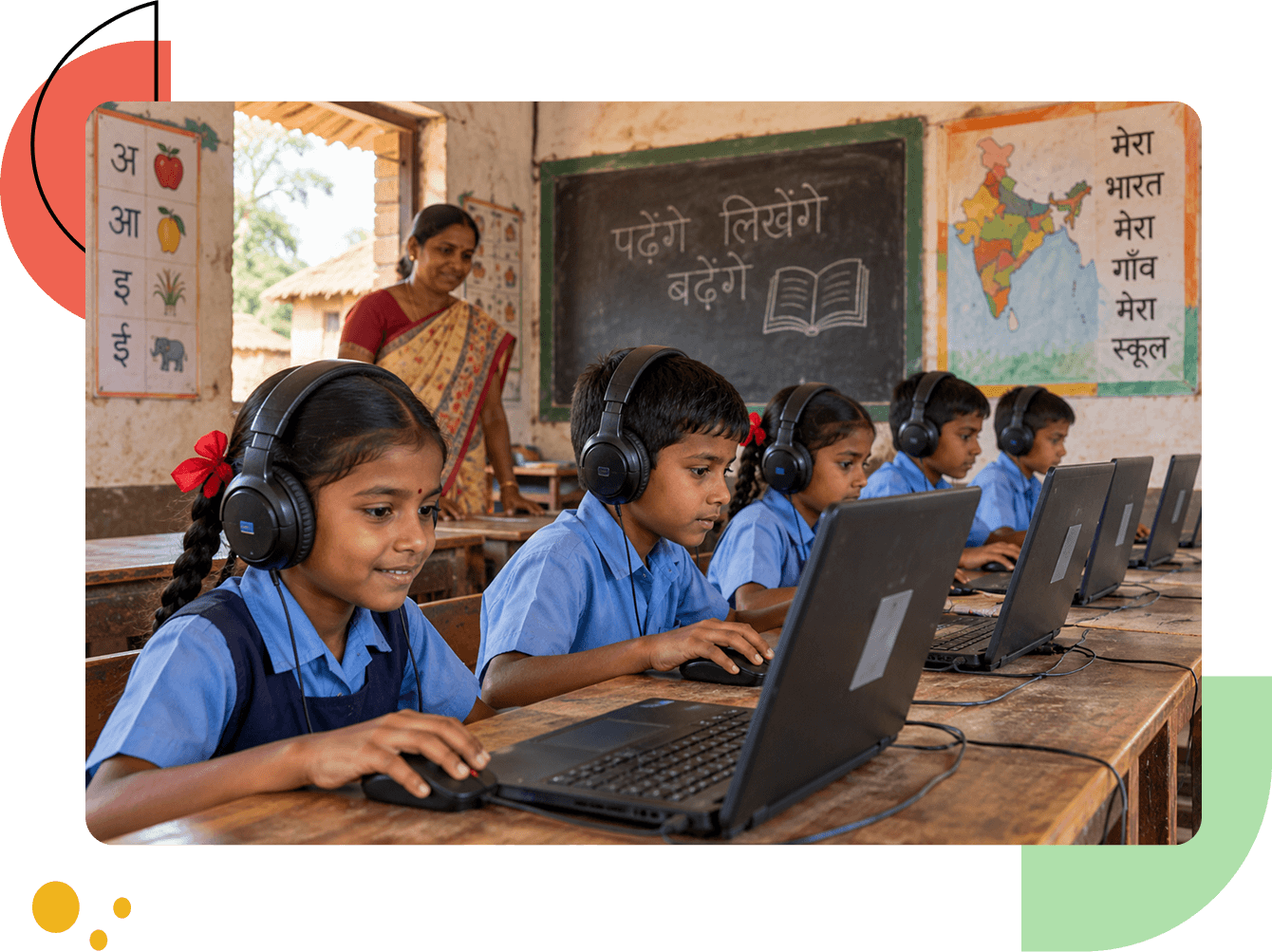
ALL exists to relax that constraint: to give every child the reading practice a classroom cannot physically supply.
The NIPUN Bharat Mission identified clear goals for reading - it specifies 45-60 correct words per minute as the goal for all children at the end of Grade 3. ALL focuses on this reading fluency goal. Neuroscience research tells us that fluency is the pre-condition for comprehension - not only for children but also for adults. Through a single-minded focus on fluency, ALL seeks to ensure that children stuck at basic levels have the targeted practice they need to get to a level where comprehension is possible.
What are the design principles of ALL

Abundant Practice: A foundation of reading proficiency is the volume of successful decoding attempts a child makes. There is no substitute for time spent reading aloud with feedback. ALL’s first job is to give every child abundant practice opportunities
Personalised Practice: Volume alone is not enough. Practice geared specifically to the level of the individual is what is truly effective. ALL is built on a principle of personalized practice - letting each child practice at their own pace and with content tailored to them. Research suggests that learners benefit from adaptive tasks calibrated to maintain a high but not perfect level of task success (around 85% accuracy), providing an effective basis for personalising task difficulty to each learner’s current ability (Wilson et al., 2019).

Safe Space for the child: Children who are behind the class are already feeling judged and anxious. A key design principle of ALL is to allow the child to learn and make mistakes at their own pace and without supervision. Learning through ALL should not be anxiety-inducing: the only challenges the child has to overcome are those of the learning journey.

Making latest research and technology available for the use of every child: Many advances in learning science, AI and machine learning are now available that can be put in the service of children that are learning to read. ALL seeks to bring the latest in neuroscience research and AI to the service of the child who is just learning to read. EkStep is in partnership with the Centre for Neuroscience at IISc, Bangalore precisely for this reason. Research will determine the best way to bring the latest advances in neuroscience to ALL, informing both task design and content selection.

Low-resource design: ALL is designed to work in low-resource environments - basic devices, poor networks, users who aren’t used to complex technology. For the intended users of ALL, these are not exceptions but the expected environment in which ALL works. ALL is therefore designed to work in such environments, and across a wide range of devices, including basic smartphones and tablets.
How ALL does it: task and content design
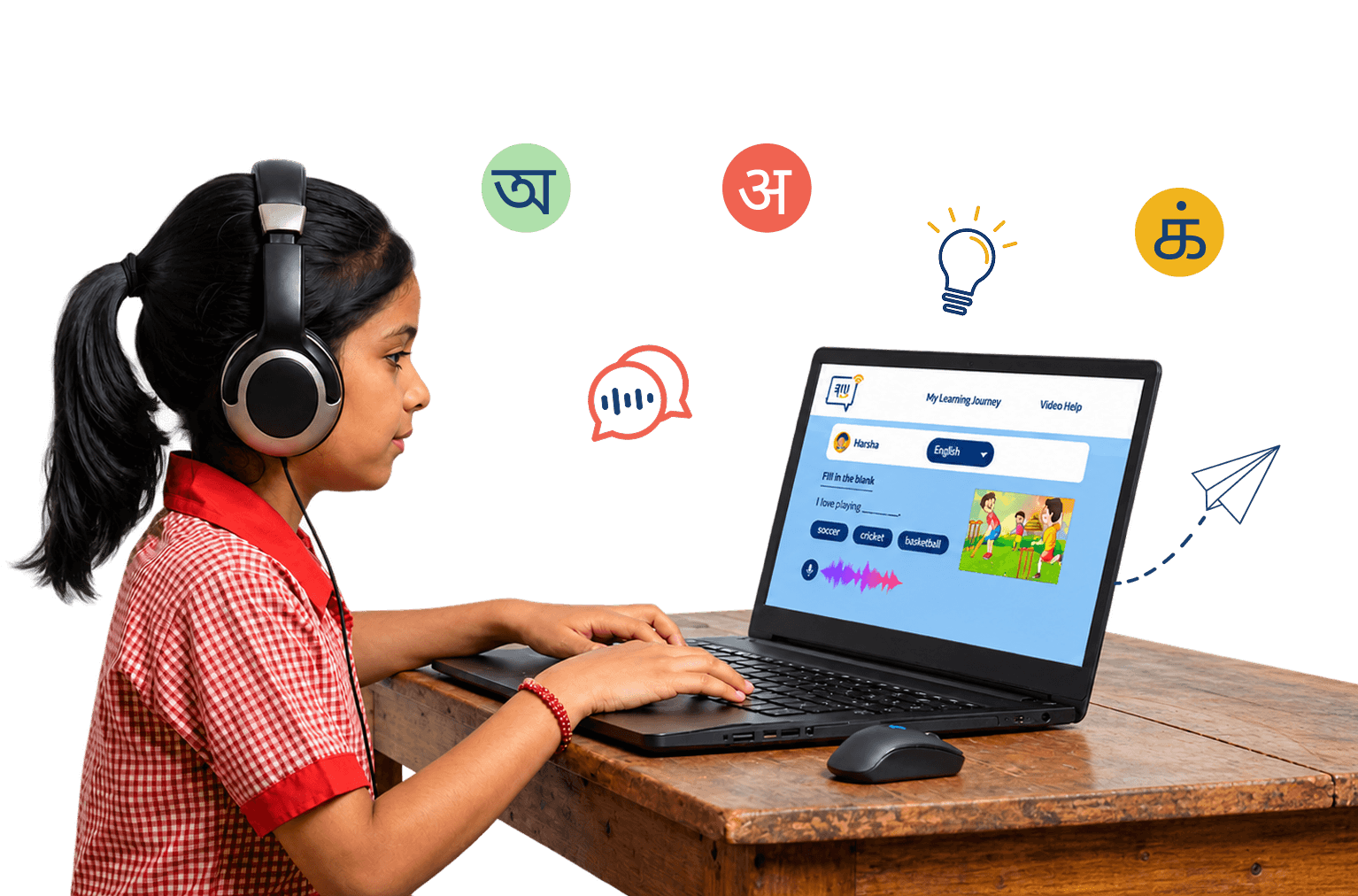
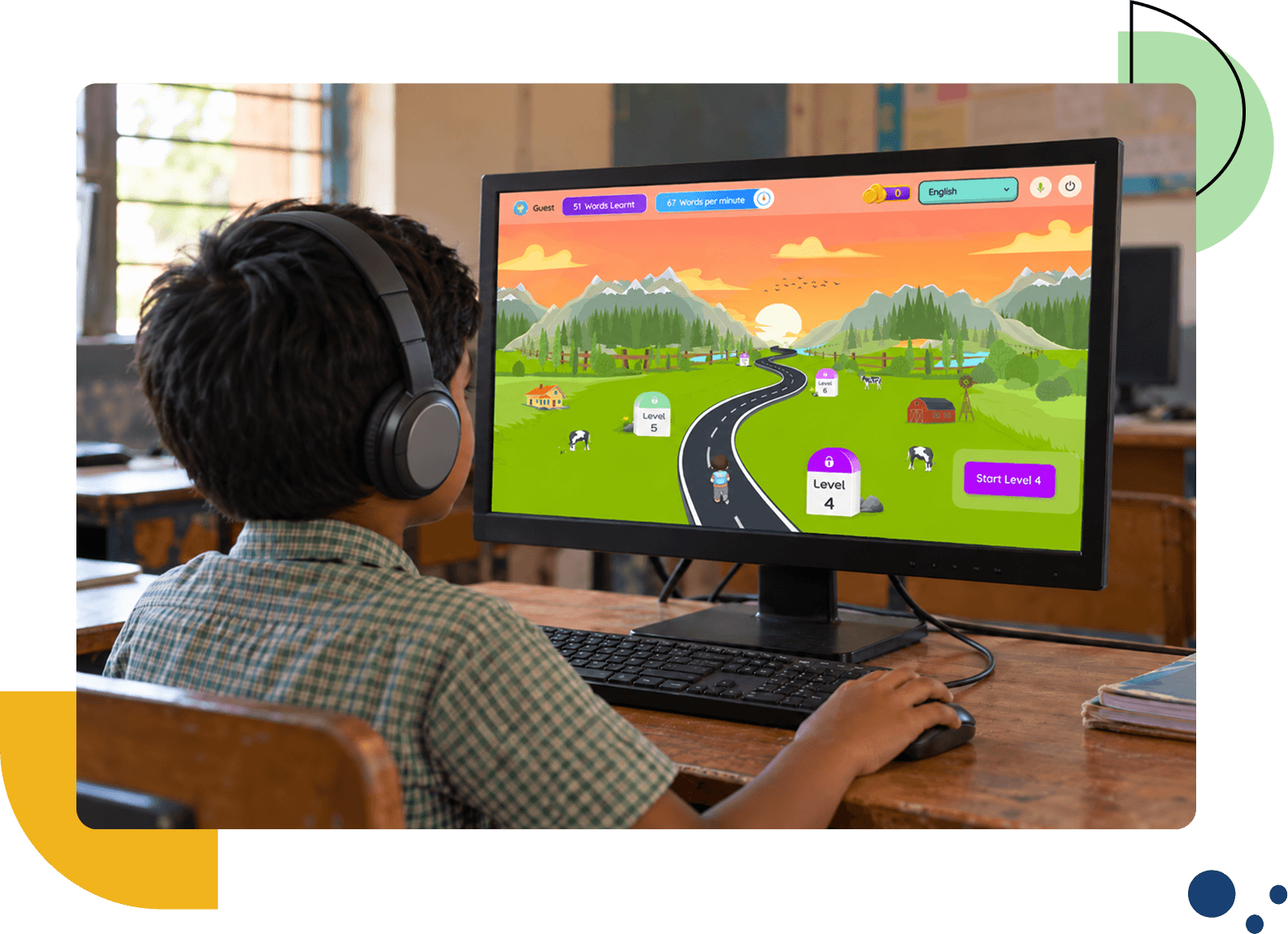
The complete ALL journey starts from letter recognition - for children that cannot recognize letters and syllables, ALL offers carefully designed practice tasks that help the child achieve letter and syllable recognition at speed. The child then moves on to reading simple words, more complex words and so on until they can read large paragraphs. Children enter this journey at their own level and proceed at their own pace. AI plays the role of an evaluator that checks whether the child is able to correctly read the content shown to them or not.
 The machinery underneath
Several models make ALL work. First, Speech recognition — built on the AI4Bharat models developed at IIT Madras, which cover 22 Indian languages and were trained on extensive on-ground data. Automatic Speech Recognition (ASR) models hear what the child actually reads and locate the error at the level of the syllable or phoneme. Second, a language complexity model holds the structure of the language itself, decomposed into the units a child must master (English has 44 phonemes; Telugu is built from 592 syllables), and turns that error into a position on the learning path. Additional elements that enhance personalization are being built - a recommendation engine that selects the next material for the child and an engagement prediction model that uses time spent, content type and usage patterns to predict what a child will stay with
 Content
A significant task in ALL is to curate content for each language that the tool is available in. ALL chooses content from state language textbooks. This content is also augmented with newer sentences and words.
How ALL fits into existing systems

The teacher stays central. ALL is an additional input into the school system, not a replacement for any part of it. ALL provides a way for children to get abundant personalized practice. Teaching remains the teacher’s job.

It runs on infrastructure schools already have. Computers, tablets and connectivity are increasingly present in schools but unevenly used. ALL is a learning layer on that existing capacity rather than a new stack, and works across desktops, laptops and tablets.

ALL brings together diagnostics, research-informed learning progression, adaptive practice, and accessible technology around one central goal: helping every learner become a better reader.

At the learner level, ALL helps students understand where they are and take the next step. At the classroom level, it gives teachers an additional mechanism to support different learners. At the school and system level, it creates a structured way to put existing digital infrastructure to work towards a shared learning outcome.

ALL is now in several states across the country. Around 24 crore words have been read in AXL. More than 70% of children who do at least 5 sessions see improvement in reading levels (through ALL internal data).
References
Wilson, R. C., Shenhav, A., Straccia, M., & Cohen, J. D. (2019). The eighty five percent rule for optimal learning. Nature communications, 10(1), 4646.