 Assisted Math Learning
Built for every learner, everywhere
An adaptive math platform designed for focus, accessibility, and scale — reaching learners in government and affordable private schools across India.
The problem
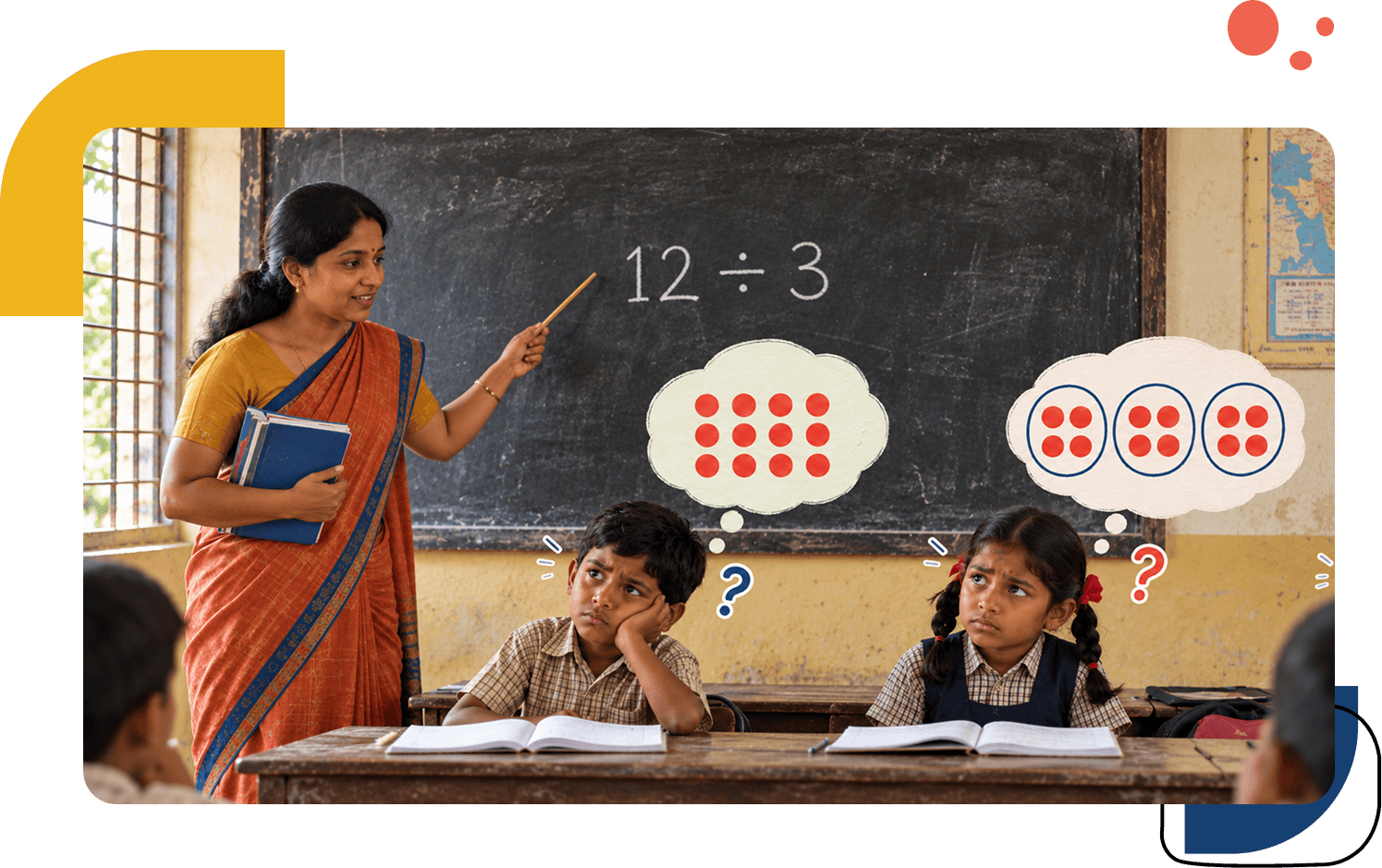
Children in our schools are falling behind grade-level goals. At Grade 3, only about one in three children can solve a simple division problem. But they don't all struggle for the same reason — some haven't grasped place value, others can't carry over. Our classrooms teach them all the same lesson anyway.
What these children need is a lesson aimed at the exact gap each one has, and plenty of practice on it.

Assisted Math Learning (AML) is built to do that: meet each child at their current level and guide them forward, one step at a time — on the devices and networks they already have.
Three design principles
AML aims to help children in our government and affordable private schools reach grade-level efficiency in basic number operations - every child should be able to do basic addition, subtraction, multiplication and division, and should have basic number sense. How AML is built is governed by this fundamental focus.
We designed AML to do the following:
-

Adapt to every child. Find each child’s specific gap and address it
-

Give abundant practice. Fluency comes from doing, repeatedly, until it sticks.
-

Keep it simple. Simple for the child to use, and simple to run at scale.
AML is not a substitute for teaching in class. It helps augment lessons learned in class, and provides greater opportunities for practice, thus lightening the teacher’s load and helping them successfully cater to the wide range of competencies to be found in a typical classroom.
1. Adapt to every child
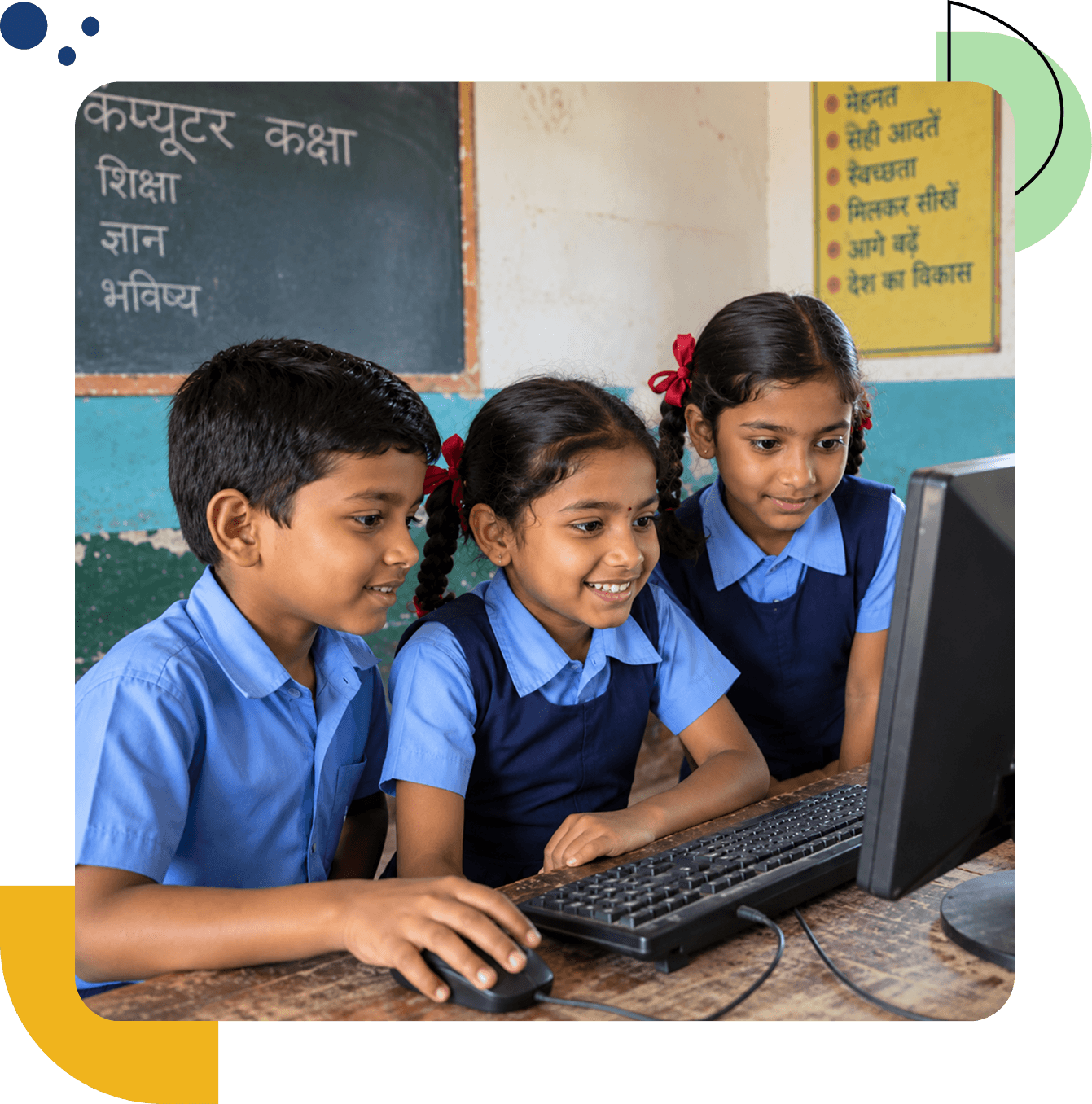
“Division” requires many sub-skills. A child learning division needs to understand place value, carry over and the concept of multiplication. Being stuck on division could mean that the child is stuck on any of these subskills. This is the level that AML works at - not at division as a whole.

A fine-grained skill map. Content is broken into small, single-idea misconceptions, each with its prerequisites, so the platform can locate the precise point where understanding breaks down rather than the broad chapter it sits in.

Start where the child is. A learner is placed by what they can currently do, not by the grade they are enrolled in.

Adjust after every response. Answers feed straight back into what comes next: move ahead when a child is fluent, step back to the prerequisite skill when they are not.

Support at the point of difficulty. A short learning video sits on the question page itself, so help arrives where the child is stuck instead of somewhere they have to go looking.
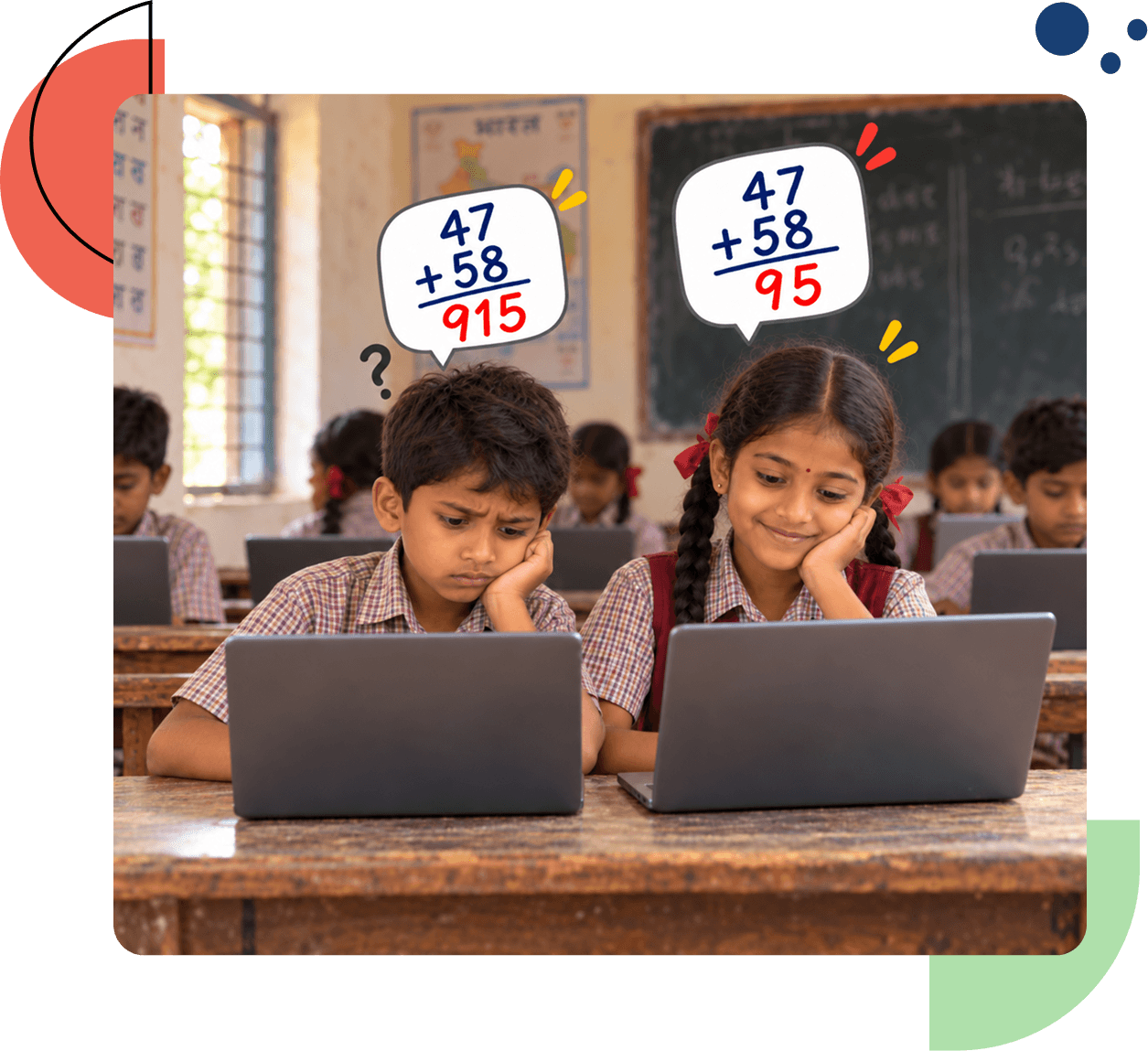
Let’s look at what this might look like in practice - imagine 2 children learning two-digit addition with carry. Perhaps they are trying 47 + 58. Both get it wrong.
- One child writes 915: putting each column’s sum side by side. The idea of place value hasn’t formed yet. So AML steps back to building the numbers with on-screen blocks before returning to the written sum.
- The second child writes 95. This child understands the method but has dropped the carry. AML gives this child short, focused practice on just this one step: filling only the carry box, until it holds, rather than teaching addition from the start.
The second child writes 95. This child understands the method but has dropped the carry. AML gives this child short, focused practice on just this one step: filling only the carry box, until it holds, rather than teaching addition from the start.
In the interface,
- Each child sees the same interface - only the content differs. Nothing on screen marks a child as behind.
- Progress is made visible. Levels and a clear sense of position show the child how far they have come, and that the next step is within reach.
2. Give abundant practice
Identifying the gap is only half the work. Closing it takes work — many attempts at the same idea, with feedback that is quick enough to correct course.
In the learning tasks
Many items per skill. Each skill carries a deep pool of questions in varied forms, so a child can practise the same idea many times over without simply re-answering the same question.

Practice to fluency, not to a fixed count. A child keeps practising a skill until they are consistently accurate, rather than for a set number of questions.

Feedback on every attempt. Learners find out immediately whether they were right, which keeps them engaged and stops errors from settling in.Feedback on every attempt. Learners find out immediately whether they were right, which keeps them engaged and stops errors from settling in.
In the interface

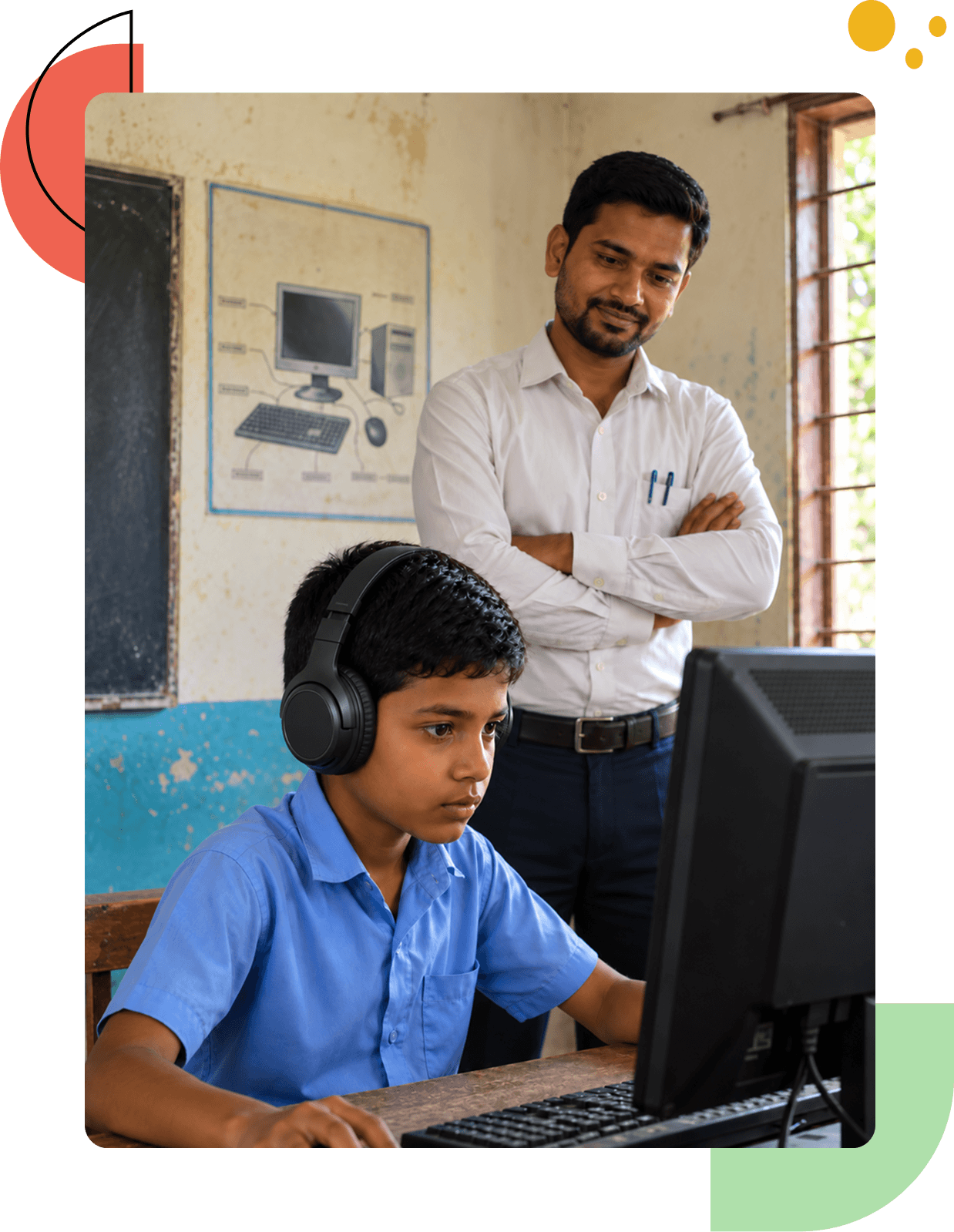
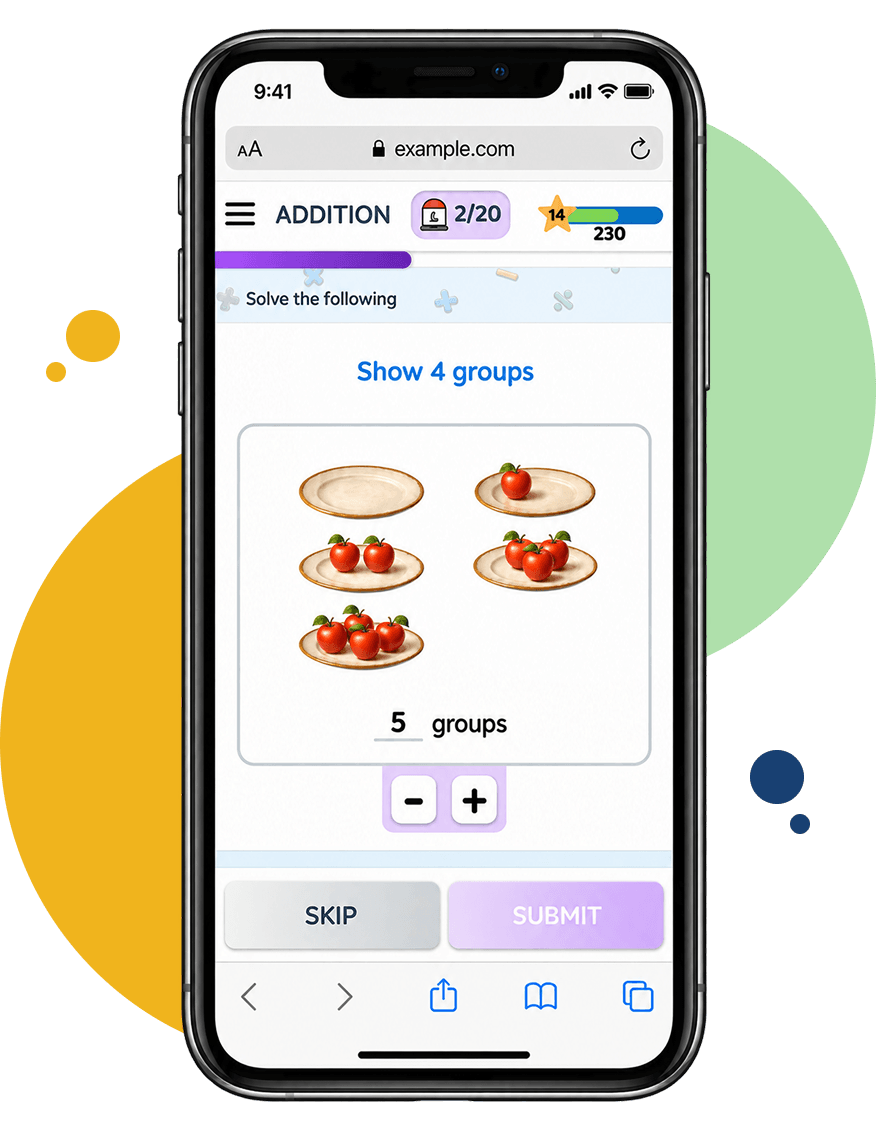
One question at a time. Each screen presents a single question, so learners stay focused and unhurried.

Minimal actions to answer. Answering takes as few taps as possible. A short, low-friction cycle is what makes high volume practical.

Rewards for progress. Learners earn stars and level up on their attempts, turning practice into steady, visible achievement.

Consistent button placement. Key actions always appear in the same place, so navigating becomes a habit and attention stays on the math.
3. Keep it simple
Simplicity is what lets the platform reach the children who need it most: an interface an early-grade child can use unaided, and a stack a school system can afford to run.
Simple for the child
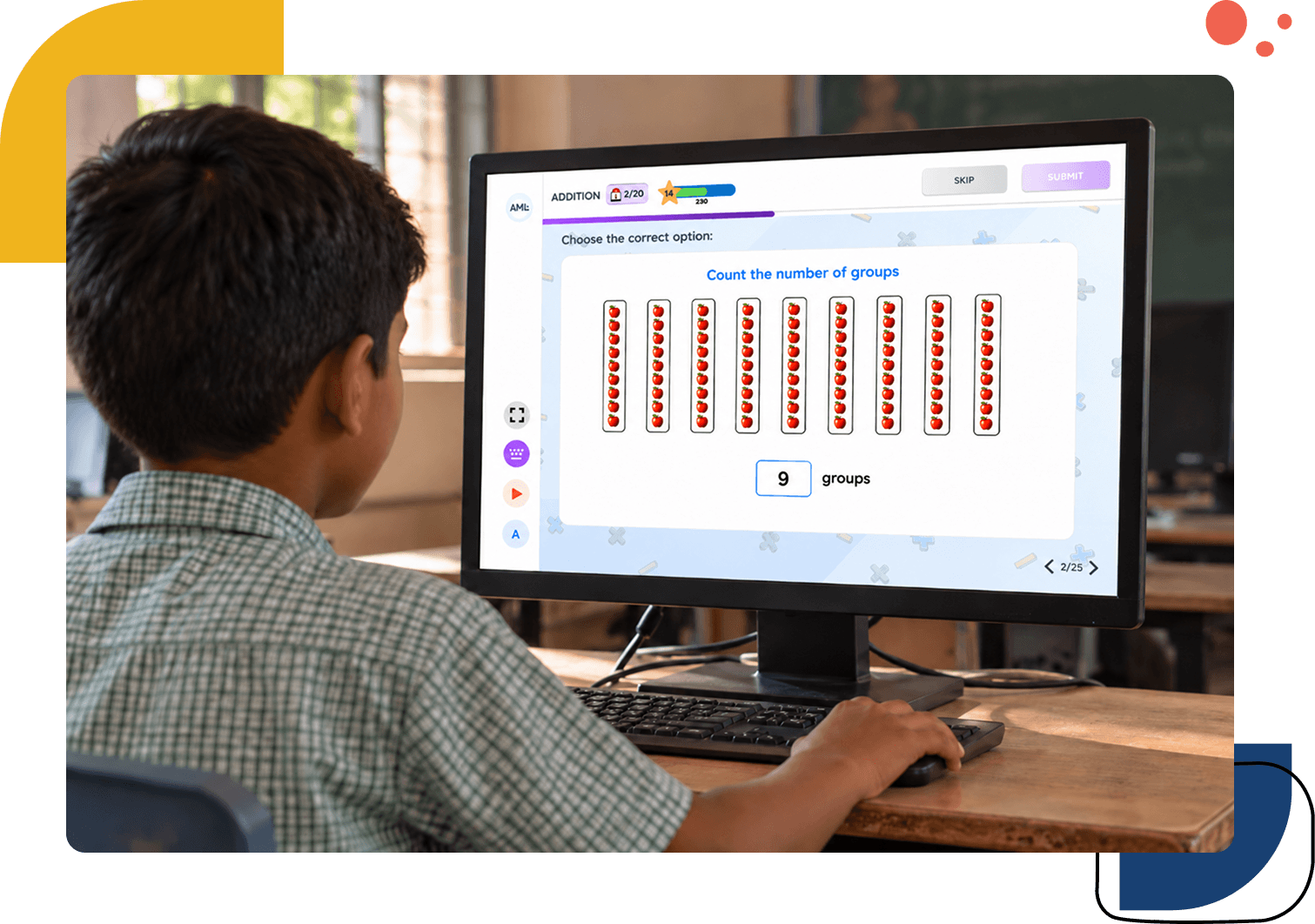
Intuitive for young learners. The flow is simple enough that early-grade children pick it up on their own, with little instruction.

Clear and readable. Question boxes use mostly black on white for strong contrast and easy reading, on modest screens and in poor light.

Fewer distractions. Non-essential controls — changing the language, for instance — are kept off the home screen so learners stay on task.

Mobile responsive. The experience adapts cleanly across phones and tablets, meeting learners on the devices they already have.

Simple to run

Quick to set up. The stack is deliberately uncomplicated, so new instances can be provisioned and running with minimal effort.

Lean instrumentation. Tracking in the interface is kept light and fully configurable, which holds down data and infrastructure costs.

Minimal memory footprint. The platform is optimised for modest hardware and constrained networks, so learners in remote, low-connectivity areas get the same quality of experience as anyone else.

Scales without re-engineering. The architecture grows to serve more learners on demand, and stays cost-optimal at every level of scale.
 Adaptive content, abundant practice, and a deliberately simple design come together in one goal: high-quality math learning that reaches every child, wherever they are.